
Stately as a Galleon – The Volvo 265 GLE
16 January 2026
Some cars possess an innate sense of stateliness; the Wolseley 6/80, the Princess 4-Litre Limousine and, of course, the Volvo 265 GLE. This 1978 example was once owned by my friend Graeme Aitken, and it is a reminder of why this was the estate car of choice for anyone who owned a Barbour jacket. Margo Leadbetter would have almost certainly told Jerry to trade in their 145 for a 265 GLE by the end of the 1970s.
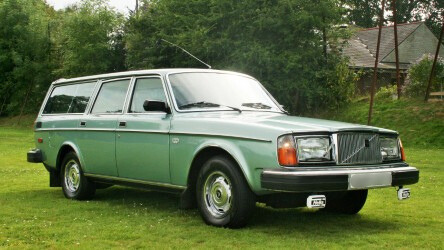
The original 264 saloon debuted in 1974 as the 164’s replacement, and there was considerable interest in its ‘PRV’ 2.7-litre V6 engine, made in France and, by 1975, shared with the Peugeot 604 and the Renault 30TS. That year, Volvo launched the 265, its first six-cylinder estate car.
Autocar thought the 265 GLE was a combination of “prodigious space and unusually comprehensive equipment”. Their report was headlined “"Stately load carrier puts weight and strength before speed" - a Volvo owner would not have wanted the 265 any other way. Motor believed “There are very few estates around that offer more space or carrying capacity”; the 265’s load bay could accommodate 50 cubic feet of luggage and over 67 cubic feet with the rear seat folded.
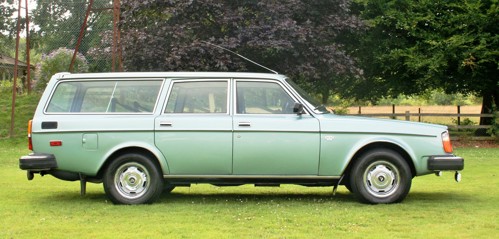
Volvo replaced the 2.7-litre engine, which had not proved entirely problem-free, with a 2.8-litre unit for the 1982 model year. A few months later, the 760 succeeded the 264, but the ‘260 Estate’, as it was latterly badged, remained in production until 1985. By then, it was the car of choice for those with no interest in the mere vagaries of fashion – and antiques dealers who modelled themselves on Donald Sinden in Never the Twain.
By 1983, a 260 GLE Estate cost £11,296, compared with £12,631 for the Ford Granada 2.8i Ghia X Estate or £12,503 for the Mercedes-Benz 230TE. You might have opted for a Citroën CX Safari 25D for £9,188, while the £9,380 Datsun 280C Estate offered vast quantities of quasi-American charm. But the discerning Volvo customer would opt for the 265’s blend of space and dignity, especially after reading the 1984 model-year brochure:
The minute you step inside a new 1984 Volvo Estate Car, you'll realise you have entered a unique environment. You will notice the practical advantages established over the years with Volvo's estates - lots of room for people and cargo - and in addition to this, Volvo's world famous virtues-comfort, quality, safety and value for money.
And the 260 GLE was exceptionally well-equipped; alloy wheels, air conditioning, metallic paint, electric windows and door mirrors, and central locking. Buyers had a choice of leather or ‘plush’ upholstery. The driver’s seat was adjustable for height and lumbar support, and could even be heated.
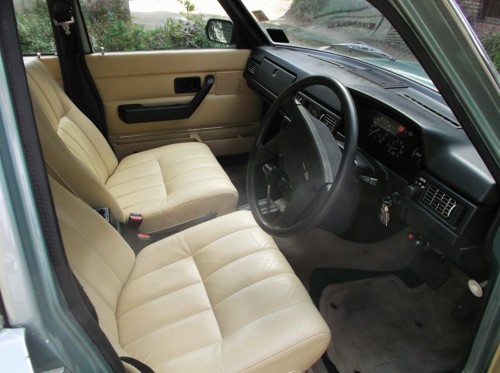
Above all, a metallic green Volvo 265 such as Grame’s would transport to that antiques fair in the Cotswold's in style, comfort and dignity. Today, he owns another classic Volvo – a 940 Estate. But that is another story!
With thanks to Graeme Aitken for his time.
With thanks to Graeme Aitken for the permission to use the images in this blog.