
Blue Is Beautiful – A 1979 Citroën Dyane 6
12 March 2026
What was the first ‘Flat Twin’ Citroën to make an impact with British motorists? The 1953-1959 Slough-built 2CV proved too eccentric for the average resident of East Cheam, with only 673 2CV saloons and 577 vans and pick-ups finding customers. UK Deux Chevaux sales only resumed in the wake of the 1973 OPEC Fuel Crisis. In 1959, Citroën GB introduced the Bijou, a Slough-built 2CV-based two-door saloon with GRP bodywork, but 1959 was also the year of the Morris Mini-Minor/Austin Seven. As for the Ami 6, that was available only to special order in this country.
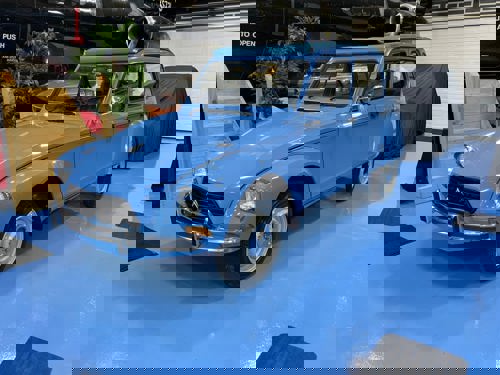
The answer is, of course, the Dyane. Nick Bailey’s one-family-from-new example dates from 1979, when your friendly local Citroën dealer could fairly claim there was not another new car like it. For a mere £2,150, you too could own a five-door cabriolet. The Renault 4TL at £2,422 was a close rival, but lacked the Dyane’s sunroof, while the 2CV6 at £1946 was devoid of a hatchback.
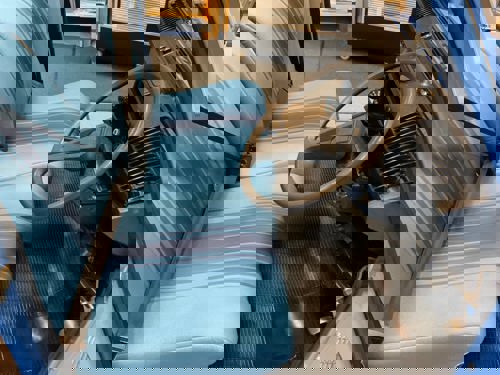
Meanwhile, Ford offered the £2491 Fiesta ‘Standard’, Vauxhall the £2,458 Chevette E and British Leyland the £2,157 Mini 850, but a Citroën devotee would argue none had the Dyane’s unique appeal. Its seats were as comfortable as an armchair, the suspension laughed in the face of inadequate road surfaces, and there was even a starting handle in case you had a flat battery.
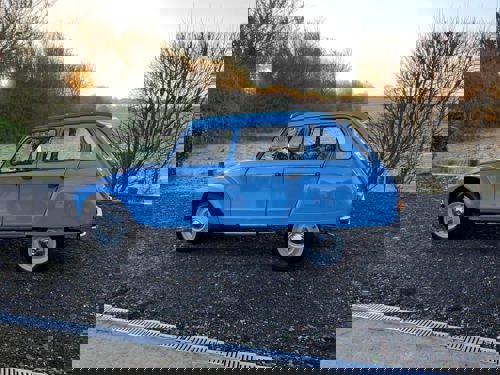
The story begins in 1964 when Pierre Bercot, the Chair of Citroën, began Project AY. The company sensed that too many younger buyers were opting for the Renault 4, as they regarded the Deux Chevaux as old-fashioned. The AY would use the 2CV’s 425cc engine and platform – and, to save more costs, the same assembly lines.
Louis Bionier of Citroën’s Panhard et Levassor subsidiary created its bodywork. The hatchback was not without controversy, as Bercot feared that a fifth door would make the AY seem too much like a van. Jacques Charreton refined the bodywork, including square headlamps, which proved too expensive for Citroën. The compromise was round units in a square frame.
The Dyane made its bow in August 1967, and by 1968 Citroën offered the Dyane 4, with a 435cc engine, or the 6 with the Ami’s 602cc engine. 1969 saw the Dyane gain ‘six light’ styling, and Citroën discontinued the 4 in 1975, when the Dyane gained a new front grille. By 1977, there were front disc brakes. Production of the saloon ended in 1983 after 1,443,493 units, although Citroën continued to sell the Acadiane van until May 1987.
UK sales began in 1969, and Citroën GB was naturally keen to ensure the Dyane’s warm reception. “Your wife will be delighted by how quickly Dyane adapts to her duties”, and “Dyane’s the girl for the young in heart family in every way”. Incidentally, this is far from the most excruciating sales copy of 1969 – take a look at Ford South Africa’s Cortina Mk. II advertisement.
Happily, the Dyane was so enjoyable that it easily transcended such ham-fisted marketing. It even starred in the wonderfully dire 1972 Reg Varney comedy Go for a Take, in which the Citroën out-acted many of the human cast, while the forces of The Master used a Dyane in Doctor Who: The Sea Devils.
And this writer does crave Neil’s Citroën thanks to his memories of his family’s 1972 Dyane 6; fitting the radiator blank for the winter months, the brilliantly simple two-stage opening roof for the summer, and the sound of that flat twin engine at full spate. Our Dyane’s windscreen wipers sounded like a frantic grandfather clock, and its cornering on the Windhover roundabout was never less than entertaining.
As Citroën GB once promised - “Dyane will take you there”. And in incomparable style.
With thanks to Neil Bailey for his time.
With thanks to Neil Bailey for their permission to use the images in this blog.